
Class 9 Social Science Chapter 1, Oceans and Life- Part 2
Understanding Society: India and Beyond | New Syllabus 2026–27
Explore Class 9 Social Science Chapter 1, Oceans and Life- Part 2, with notes, worksheets, competency-based questions, MCQs, revision resources and exercise solutions for the 2026–27 syllabus. This chapter explores the importance of oceans, marine life and their role in sustaining life on Earth.
This chapter follows the latest Class 9 curriculum. For official curriculum information, visit CBSE Academic.
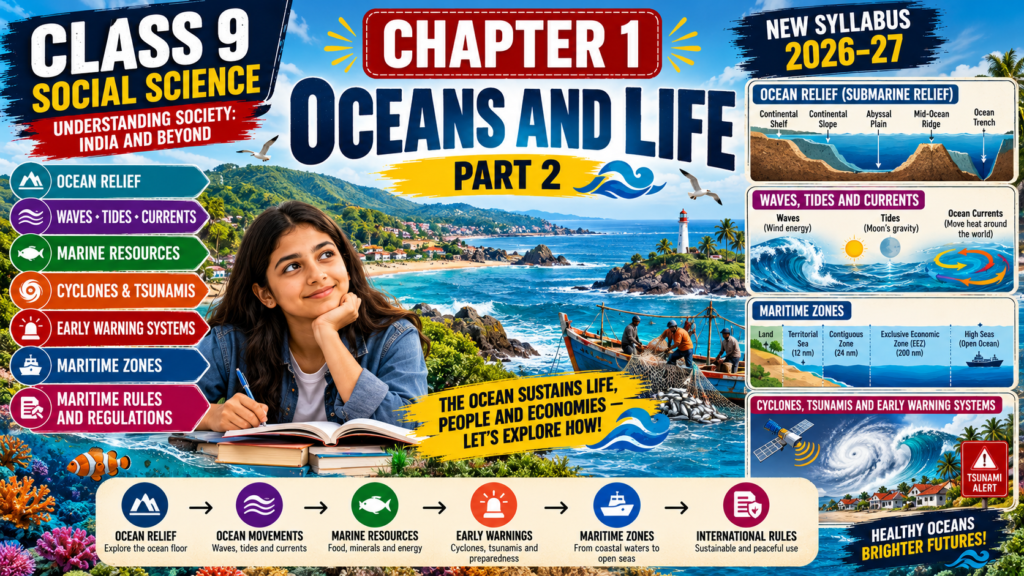
Table of Contents
📅 Last Updated: September 2026
📘 Syllabus: Based on the latest CBSE Class 9 (2026–27) syllabus
✅ Updated Resources Include:
- 📚 Chapter-wise Study Notes
- 📄 Free PDF Downloads
- ❓ MCQs
- 📝 Worksheets
- 📖 NCERT Exercise Solutions
Chapter Overview of Class 9 Social Science Chapter 1, Oceans and Life Part 2
Oceans and Life introduces students to the importance of oceans and their role in supporting life on Earth. The chapter explores ocean relief, including major features of the ocean floor, and explains the movement of ocean water through waves, tides and currents.
Students also learn about marine resources and their significance, including the role of oceans in fishing, navigation, trade and livelihoods. The chapter highlights the challenges associated with the use and management of marine resources.
The chapter also examines cyclones and tsunamis, including the importance of early warning systems and disaster preparedness. Students learn why international cooperation and maritime rules and regulations are necessary for managing ocean spaces and activities.
| Detail | Information |
|---|---|
| Class | 9 |
| Subject | Social Science – Geography |
| Chapter | 1 |
| Chapter Name | Oceans and Life |
| Textbook | Understanding Society: India and Beyond, Part 2 |
| Academic Session | 2026–27 |
About This Chapter Class 9 Social Science Chapter 1, Oceans and Life Part 2
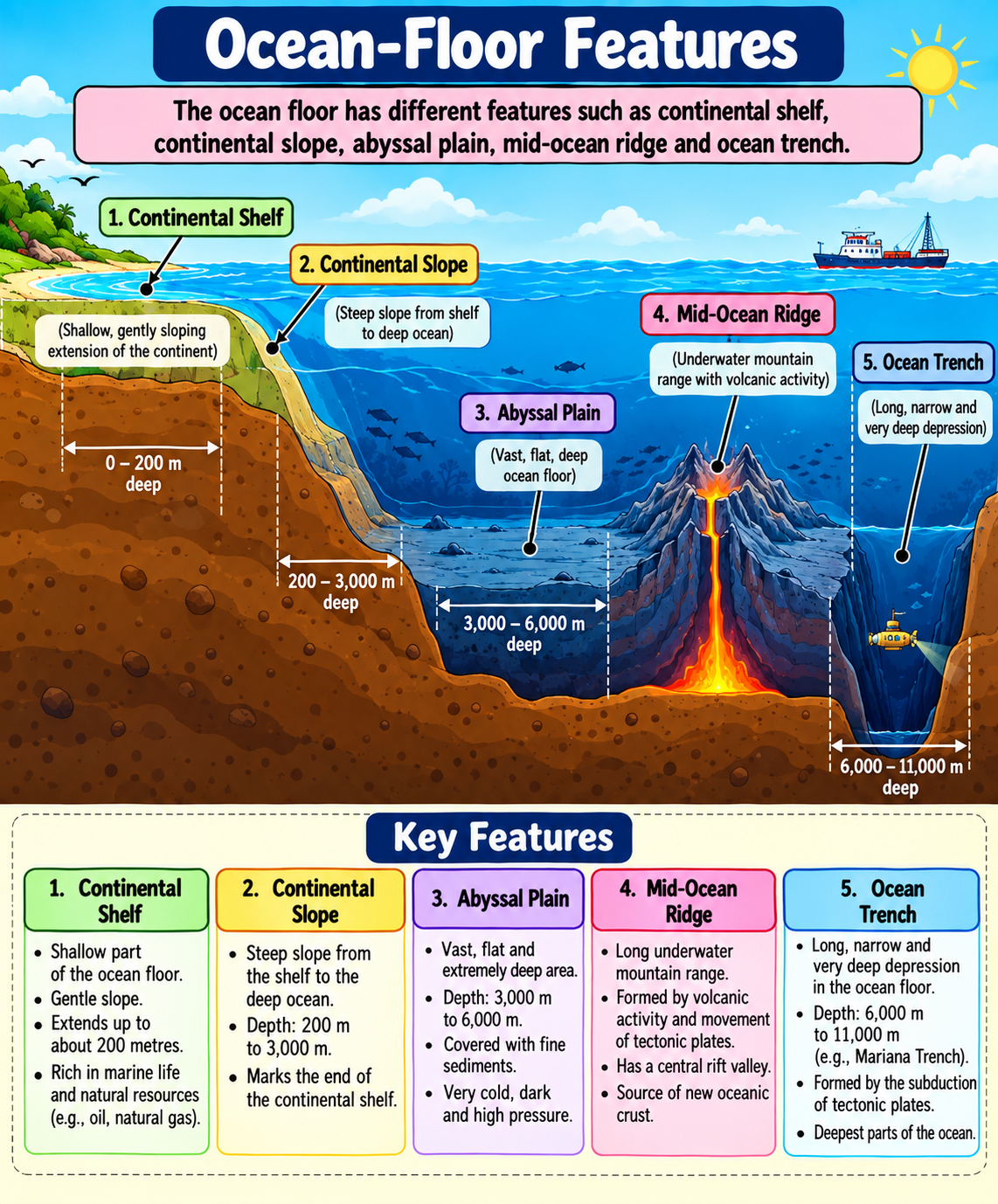
In this chapter, students explore the importance of oceans and their connection with life and human activities. The chapter begins with ocean relief, introducing features of the ocean floor such as continental shelves, continental slopes, abyssal plains, mid-ocean ridges, seamounts, guyots and ocean trenches.
Students then learn about the movement of ocean water through waves, tides and currents and how these movements influence marine life, climate, fishing, navigation and coastal activities.
The chapter also examines cyclones and tsunamis, with a focus on early warning systems and how timely information, technology, public awareness and preparedness can help protect lives.
Students further explore marine resources, their importance for food, livelihoods, energy, trade and tourism, and the need to use these resources sustainably. The chapter concludes with maritime zones and international maritime rules, including territorial waters, the contiguous zone, Exclusive Economic Zones (EEZs) and the high seas.
Learning Outcomes of Class 9 Social Science Chapter 1, Oceans and Life Part 2
After completing Chapter 1, students should be able to:
- Explain the importance of ocean relief and identify major submarine landforms.
- Describe how waves, tides and ocean currents move ocean water.
- Explain the formation and significance of spring tides and neap tides.
- Understand how ocean movements influence climate, marine life, fishing and navigation.
- Explain the importance of maritime zones such as territorial waters, the contiguous zone, EEZs and the high seas.
- Identify different marine resources and explain their importance for life and livelihoods.
- Understand the importance of sustainable use and conservation of marine resources.
- Explain how cyclone and tsunami early warning systems help protect coastal communities.
- Understand the role of international maritime rules and agreements in the safe and sustainable use of oceans.
Key Topics of Class 9 Social Science Chapter 1, Oceans and Life Part 2
🌊 Ocean Relief
Features of the ocean floor, including continental shelf, continental slope, abyssal plain, mid-ocean ridge, ocean trenches, seamounts and guyots.
🌊 Waves
Ocean waves, their movement, wavelength, wave height, crest and trough, and their role in shaping coastal landforms.
🌙 Tides
The rhythmic rise and fall of ocean water, including high tide, low tide, spring tides and neap tides.
🔄 Ocean Currents
Continuous movements of ocean water, including warm and cold currents and the factors that influence them.
🌀 Cyclones and Tsunamis
Ocean-related hazards and the importance of preparedness and timely warnings.
📡 Early Warning Systems
How seismic stations, ocean-bottom pressure recorders, satellites, tide gauges and communication systems help detect and warn people about tsunamis and cyclones.
🐟 Marine Resources
Living and non-living marine resources, including fish, marine organisms, minerals, oil, natural gas and ocean energy.
💙 Significance of Marine Resources
The importance of oceans for food, livelihoods, energy, minerals, trade, tourism and cultural significance.
⚓ Maritime Zones
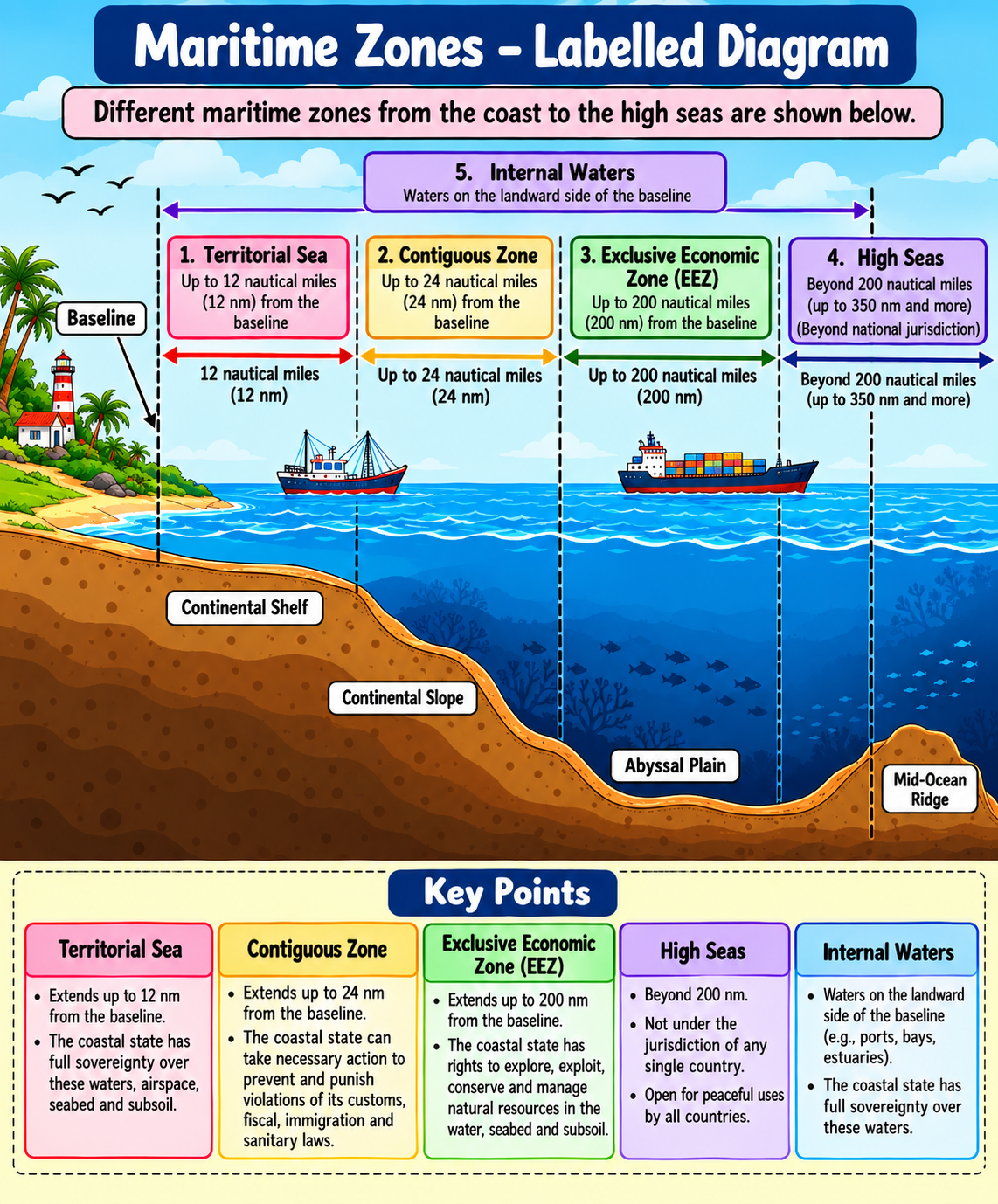
Territorial sea, contiguous zone, Exclusive Economic Zone (EEZ) and high seas, including their different rights and uses.
🌍 Maritime Rules and Regulations
The importance of international rules, cooperation and agreements such as UNCLOS for safe, sustainable and peaceful use of the oceans.
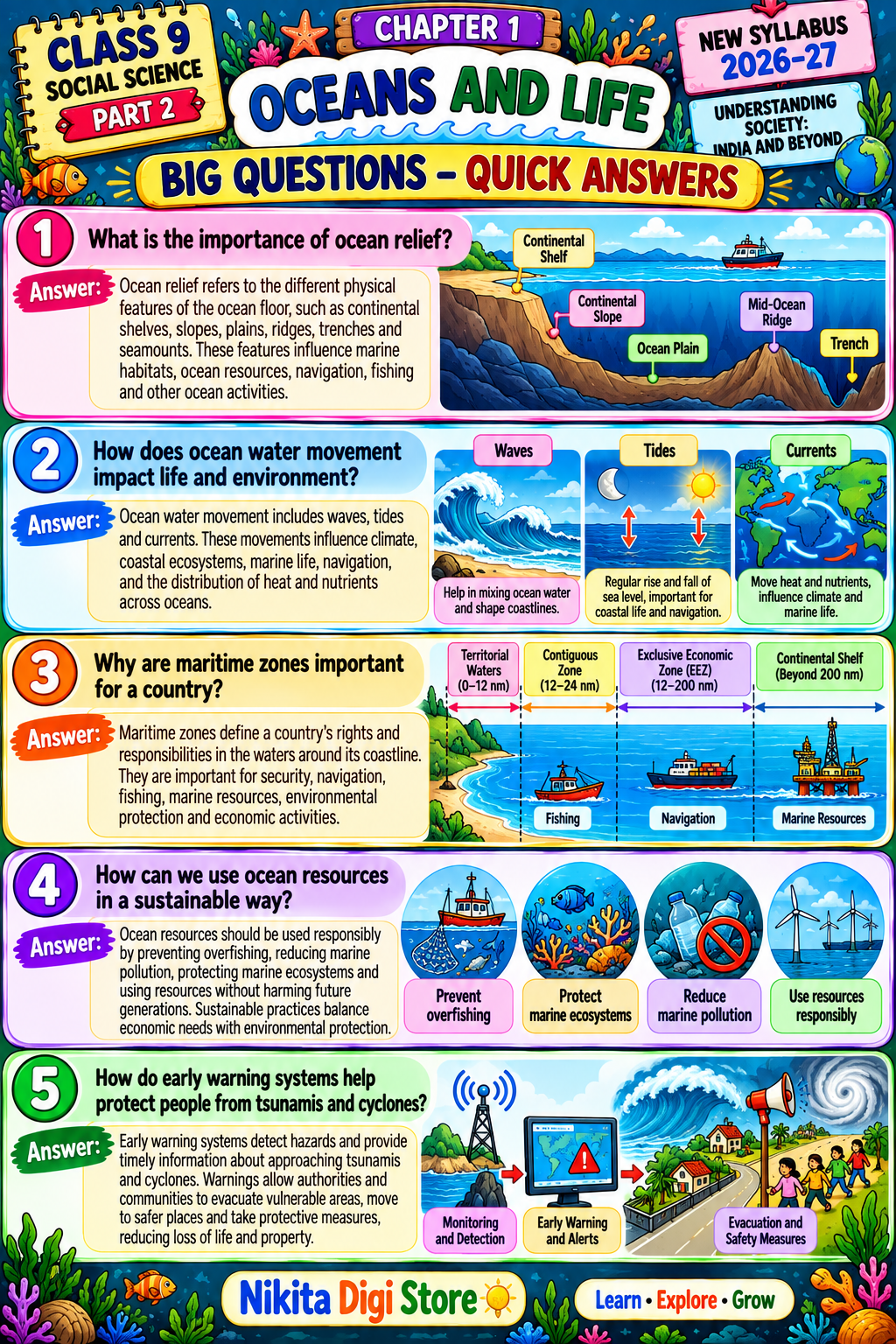
❓ Big Questions of Class 9 Social Science Chapter 1
Key questions and quick answers to help students understand and revise the important concepts of Chapter
1. What is the importance of ocean relief?
Answer: Ocean relief refers to the different physical features of the ocean floor, such as continental shelves, slopes, plains, ridges, trenches and seamounts. These features influence marine habitats, ocean currents, resources and human activities such as fishing, navigation and offshore resource exploration.
2. How does ocean water movement impact life and environment?
Answer: Ocean water movement includes waves, tides and currents. These movements influence climate, coastal ecosystems, marine life, navigation and the distribution of heat and nutrients across oceans.
3. Why are maritime zones important for a country?
Answer: Maritime zones define a country’s rights and responsibilities in the waters around its coastline. They are important for security, navigation, fishing, marine resources, environmental protection and economic activities.
4. How can we use ocean resources in a sustainable way?
Answer: Ocean resources should be used responsibly by preventing overfishing, reducing marine pollution, protecting marine ecosystems and using resources without damaging the ability of future generations to benefit from them. Sustainable practices help balance economic needs with environmental protection.
5. How do early warning systems help protect people from tsunamis and cyclones?
Answer: Early warning systems detect hazards and provide timely information about approaching tsunamis and cyclones. Warnings allow authorities and communities to evacuate vulnerable areas, move to safer places and take protective measures, thereby reducing loss of life and property.
🎨 Visual Revision: Big Questions at a Glance
Key questions and quick answers to help students understand and revise the important concepts of Chapter
⭐ Class 9 Social Science Chapter 1 Study Resources – Part 2
Get complete study and practice resources for Class 9 Social Science Chapter 1, Oceans and Life Part 2 from Understanding Society: India and Beyond, Part 2, based on the new Class 9 Social Science curriculum for 2026–27.
📌 Important Questions
Most important questions to prepare for exams and chapter revision.
🗺️ Visual Learning Resources
Explore maps and diagrams to understand the key concepts of Oceans and Life.
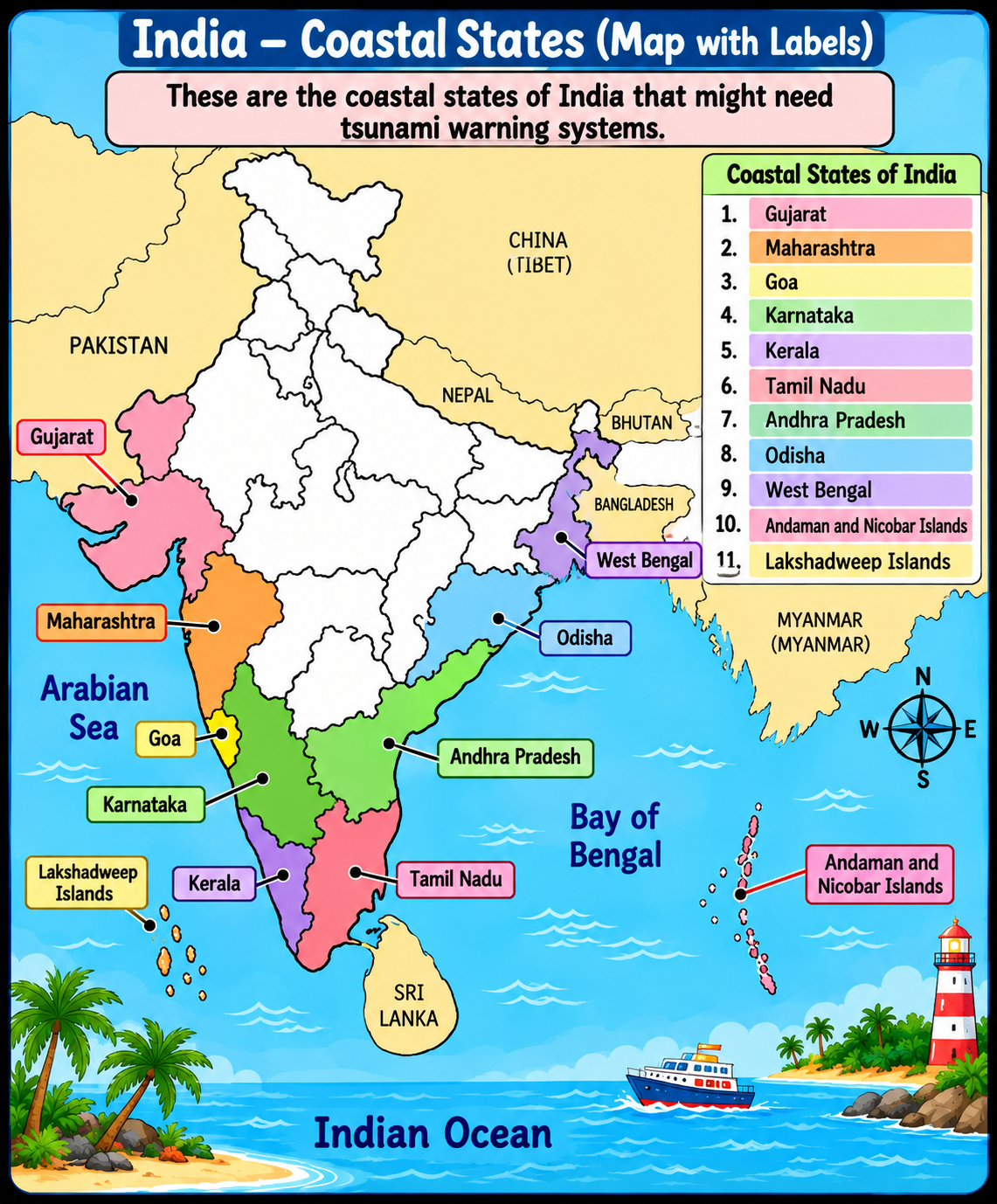
🗺️ Coastal States of India
Reference map for coastal states and tsunami preparedness
🌊 Ocean-Floor Features
Learn about the major features of the ocean floor
🚢 Maritime Zones
Understand Territorial Sea, Contiguous Zone and EEZ
🎁 Free Class 9 Social Science Chapter 1 Worksheets – Part 2
Start your Chapter 1 preparation with selected practice questions covering ocean relief, waves, tides, ocean currents, marine resources, maritime zones, and early warning systems for cyclones and tsunamis.
NCERT Exercise Solutions – Chapter 1 | Part 2
Find help with the questions and activities from Chapter 1 – Oceans and Life.
The chapter includes activities related to submarine relief, waves, tides and currents, marine resources, maritime zones, sustainable use of ocean resources, and early warning systems for tsunamis and cyclones.
Why Students Choose Our Class 9 Social Science Resources?
2026–27 Focused
Printable PDFs
Original Practice
Chapter-Wise Resources
Mobile Friendly
Answer Keys
❓FAQ of Class 9 Social Science Chapter 1, Oceans and Life Part 2
Q1. What is Chapter 1 of Class 9 Social Science Part 2?
Chapter 1 is “Oceans and Life” from Understanding Society: India and Beyond, Part 2. It explores ocean relief, ocean movements, marine resources, maritime zones, and early warning systems for cyclones and tsunamis.
Q2. What are the main topics in Chapter 1 – Oceans and Life?
The main topics include ocean relief, waves, tides, ocean currents, cyclones and tsunamis, early warning systems, marine resources, maritime zones and maritime rules.
Q3. What is ocean relief?
Ocean relief refers to the various landforms and physical features found on the ocean floor, such as continental shelves, continental slopes, abyssal plains, mid-ocean ridges, trenches, seamounts and guyots.
Q4. What are waves, tides and ocean currents?
Waves are movements of ocean water mainly caused by winds. Tides are the rhythmic rise and fall of ocean water, while ocean currents are continuous streams of water flowing across the ocean surface.
Q5. What are spring tides and neap tides?
Spring tides occur when the Sun, Earth and Moon are aligned, producing a greater tidal range. Neap tides occur during the first- and third-quarter Moon phases, when the tidal range is smaller.
Q6. What are marine resources?
Marine resources are resources obtained from oceans that have intrinsic or economic value. They include living resources such as fish and marine organisms and non-living resources such as minerals, oil, natural gas and ocean energy.
Q7. What are maritime zones?
Maritime zones are areas of the ocean defined under international law. They include territorial waters, the contiguous zone, the Exclusive Economic Zone (EEZ) and the high seas.
Q8. How do early warning systems help during tsunamis and cyclones?
Early warning systems use technologies such as seismic stations, ocean-bottom pressure recorders, satellites, tide gauges and communication networks to detect hazards and send timely warnings so people can take appropriate safety measures.
🚀 Continue Your Class 9 Social Science Journey
Next Chapter
📚 All Chapters
Ready to Practise Class 9 Social Science?
Build your understanding of Class 9 Social Science Chapter 1, Oceans and Life Part 2 with chapter-wise study and practice resources.
Share this Chapter Class 9 Social Science Chapter 1, Oceans and Life Part 2
Found these Class 9 Social Science Chapter 1 resources helpful? Share this page with students, parents and teachers.
Did You Find This Chapter Helpful?
👍 Yes / 👎 No
- More worksheets
- More MCQs
- More important questions
- More maps & diagrams
- More revision notes
- NCERT solutions