
Counting Worksheets for Preschool and Kindergarten: Fun Printable Activities for Early Math Success
Learning to count is one of the most important milestones in early childhood education. Counting helps children understand numbers, quantities, patterns, and basic math concepts that they will use throughout their school years.
Whether you are a parent, teacher, or homeschool educator, counting worksheets provide a fun and effective way to help children practice number recognition, counting objects, tracing numbers, and matching quantities.
In this guide, you’ll discover the benefits of counting worksheets, fun counting activities, and printable resources that can make learning numbers exciting for preschool and kindergarten learners.
Table of Contents
Benefits of Counting Worksheets
Counting worksheets offer many educational benefits for young learners.
Improves Number Recognition
Children learn to identify numbers quickly and accurately through repeated practice.
Develops One-to-One Correspondence
Kids learn that each object counted represents one number.
Builds Confidence
Successful counting activities help children feel more confident in their math abilities.
Strengthens Fine Motor Skills
Tracing and writing numbers improves pencil control and handwriting readiness.
Supports Kindergarten Readiness
Counting is one of the key skills children need before entering kindergarten.
Fun Counting Activities for Preschoolers
Counting does not have to be limited to worksheets. Preschoolers learn best through hands-on activities that make numbers meaningful and exciting. Combining printable worksheets with everyday counting games helps children develop stronger number skills and build confidence.
Count Toys
Ask children to count their favorite toys, such as toy cars, dolls, or building blocks. This simple activity helps improve number recognition and one-to-one correspondence skills.
Example Activity:
“Can you count how many toy cars are in the box?”
Count Blocks
Building blocks are excellent learning tools. Children can count blocks while building towers and compare which tower has more or fewer blocks.
Example Activity:
“Let’s build a tower with 10 blocks and count each block as we stack it.”
Count Fruits
Counting fruits during snack time turns everyday routines into learning opportunities. Children can count apples, bananas, grapes, or oranges while learning healthy habits.
Example Activity:
“How many grapes are on your plate? Let’s count together.”
Count Classroom Objects
Teachers can encourage students to count pencils, books, chairs, crayons, or other classroom items. This helps children see numbers in real-life situations.
Example Activity:
“Count how many pencils are on your desk.”
Count Outdoor Items
Nature provides endless counting opportunities. Children can count flowers, leaves, birds, stones, or trees during outdoor play.
Example Activity:
“Can you find and count five flowers in the garden?”
Why Printable Counting Worksheets Work
Printable worksheets remain one of the most effective tools for early childhood learning. They provide structured practice while keeping learning enjoyable and engaging.
Screen-Free Learning
Printable worksheets offer children a healthy break from screens. They encourage hands-on learning and improve focus without the distractions of digital devices.
Repetition Builds Confidence
Young learners need repeated practice to master counting skills. Worksheets allow children to practice counting multiple times until they feel confident.
Independent Practice
Many counting activities can be completed independently. This helps children develop responsibility, concentration, and self-confidence.
Parent Involvement
Printable worksheets create opportunities for parents to participate in their child’s learning journey. Parents can guide, encourage, and celebrate their child’s progress.
By combining fun activities with printable worksheets, children develop stronger math foundations and enjoy learning at the same time.
Important Counting Skills Children Learn
Counting worksheets help children develop several essential early math skills that prepare them for kindergarten and beyond.
Number Recognition
Children learn to identify and name numbers from 1 to 20 and beyond. Recognizing numbers is the first step toward understanding mathematics.
One-to-One Correspondence
This skill helps children understand that each object counted represents one number. For example, when counting five apples, each apple receives only one number.
Sequencing Numbers
Children learn the correct order of numbers and understand that numbers follow a predictable pattern.
Example:
1, 2, 3, 4, 5…
Comparing Quantities
Counting helps children understand concepts such as:
- More
- Less
- Equal
These comparison skills form the basis for future math concepts.
Early Addition Readiness
Strong counting skills prepare children for addition and subtraction. When children can count confidently, they are ready to solve simple math problems.
For example:
2+3=52+3=52+3=5
A child who understands counting can easily count two objects and then three more to find the total.
Developing these foundational skills through counting worksheets helps children become confident learners and prepares them for future success in mathematics.
Types of Counting Worksheets for Preschool and Kindergarten
Count and Circle Worksheets
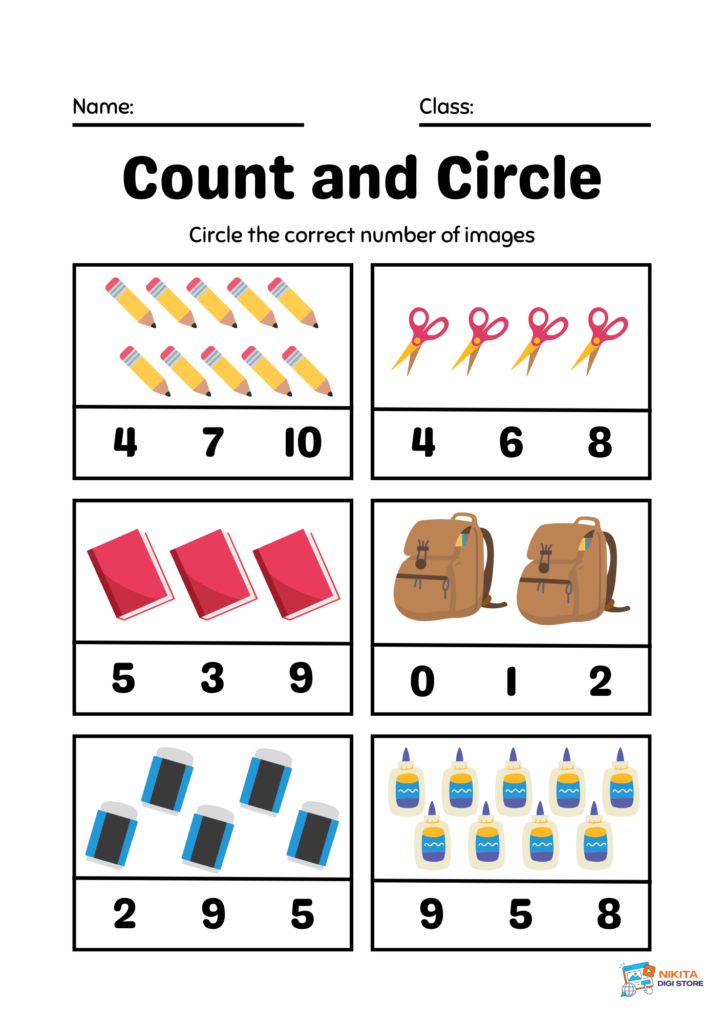
Children count objects and circle the correct answer. These activities improve counting accuracy and number recognition.
Count and Match Worksheets
Students connect groups of objects with the correct numbers, helping them understand quantities.
Count and Trace Worksheets
Kids count pictures and trace numbers, combining math practice with handwriting development.
Count and Write Worksheets
Children count objects independently and write the correct answer
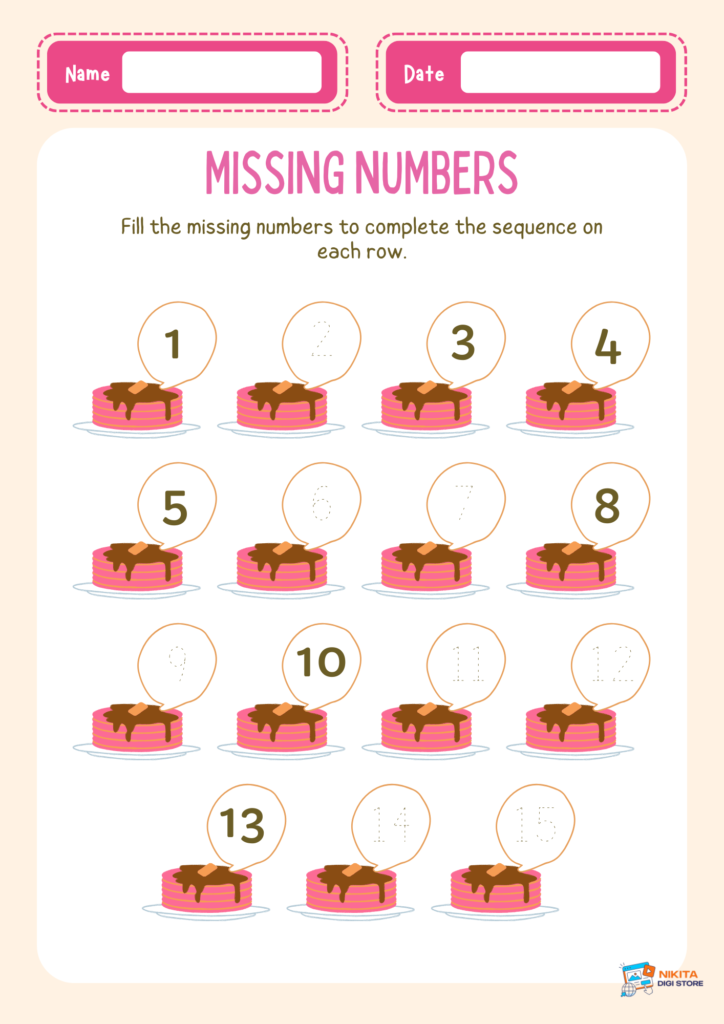
Missing Numbers Worksheets
Students fill in missing numbers to strengthen sequencing and counting skills.
Count and Color Worksheets
Kids count objects and color according to instructions, making learning more engaging.
Related Counting Resources
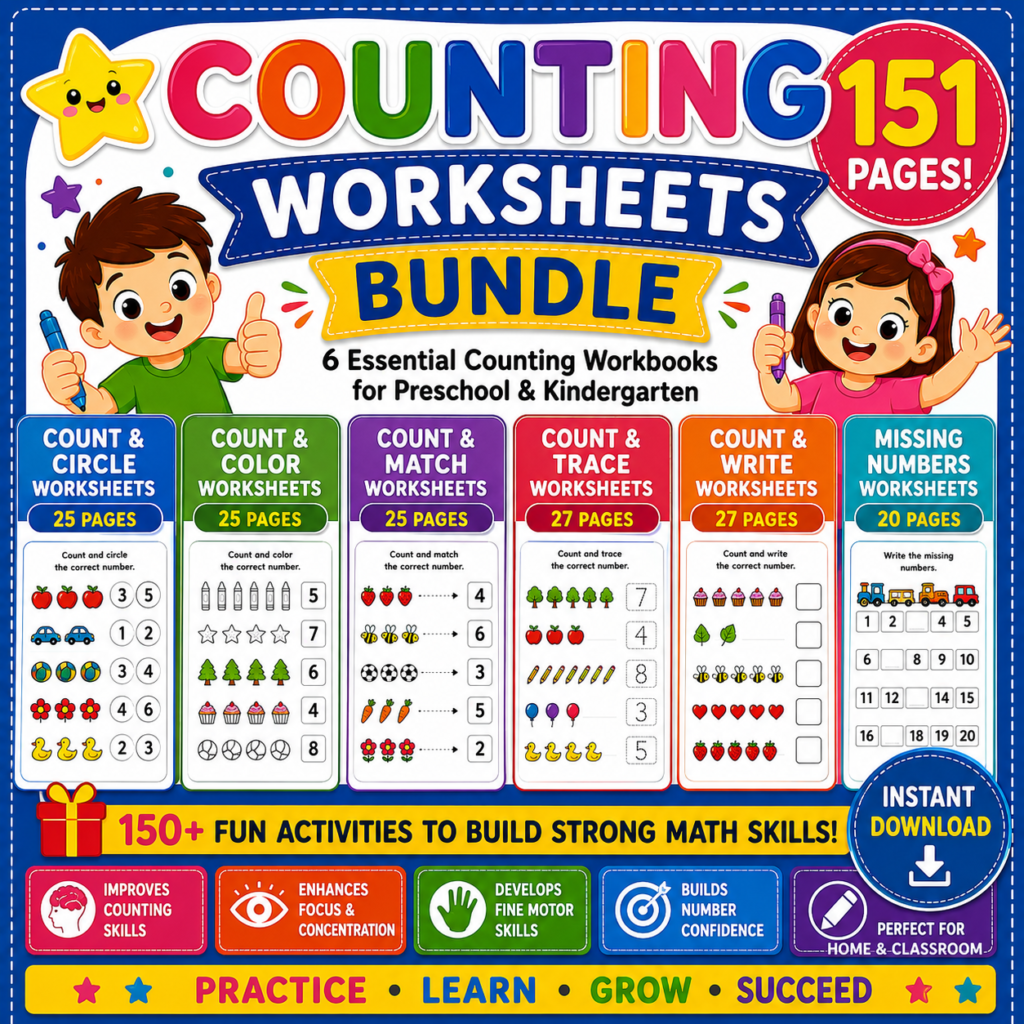
Counting Worksheets Bundle for Kids – 151 Printable Activities
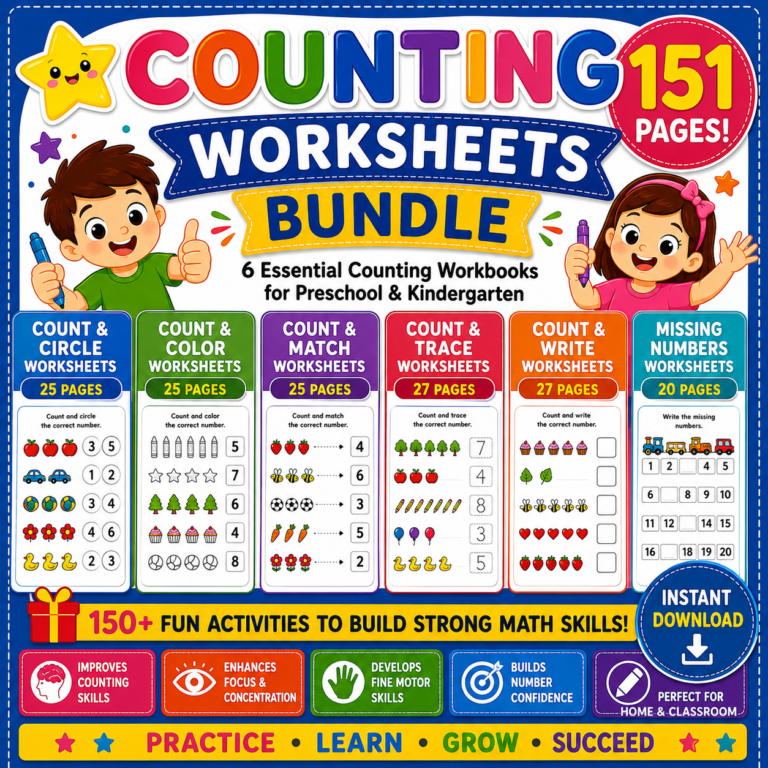
Our Counting Worksheets Bundle includes 151 printable activities designed to help preschool and kindergarten children master number recognition, counting,tracing, matching, and writing skills. Perfect for classrooms, homeschooling, and extra practice at home.
- Count & Circle Worksheets
- Count & Match Worksheets
- Count & Trace Worksheets
- Count & Write Worksheets
- Missing Numbers Activities
- Number Recognition Practice
Ready to Build Strong Counting Skills?
Help your child build number recognition, counting confidence, and early math skills with our 151-page Counting Worksheets Bundle.
 Count & Circle Count & Match
Count & Trace Worksheets Count & Write
Missing Numbers Number Recognition Practic
⭐ Perfect for Preschool, Kindergarten, Homeschool, and Classroom Learning.
FAQ
What age are counting worksheets suitable for?
Counting worksheets are ideal for preschool and kindergarten children, typically ages 3–6.
How often should children practice counting?
Daily practice of 10–15 minutes is recommended.
Can counting worksheets be used for homeschooling?
Yes, they are excellent resources for homeschool families.
What counting skills do these worksheets teach?
Number recognition, counting objects, matching quantities, tracing numbers, and writing numbers.
Are printable worksheets effective?
Yes. Consistent worksheet practice improves early math confidence and foundational skills.
Conclusion
Counting worksheets are one of the most effective tools for helping preschool and kindergarten children develop early math skills. Through engaging activities such as counting, tracing, matching, writing, and coloring, children build confidence while creating a strong foundation for future learning.
Whether you are teaching at home or in the classroom, printable counting worksheets provide a fun and structured way to support your child’s educational journey.
Get Printable Worksheets & Learning Resources
Related Posts